

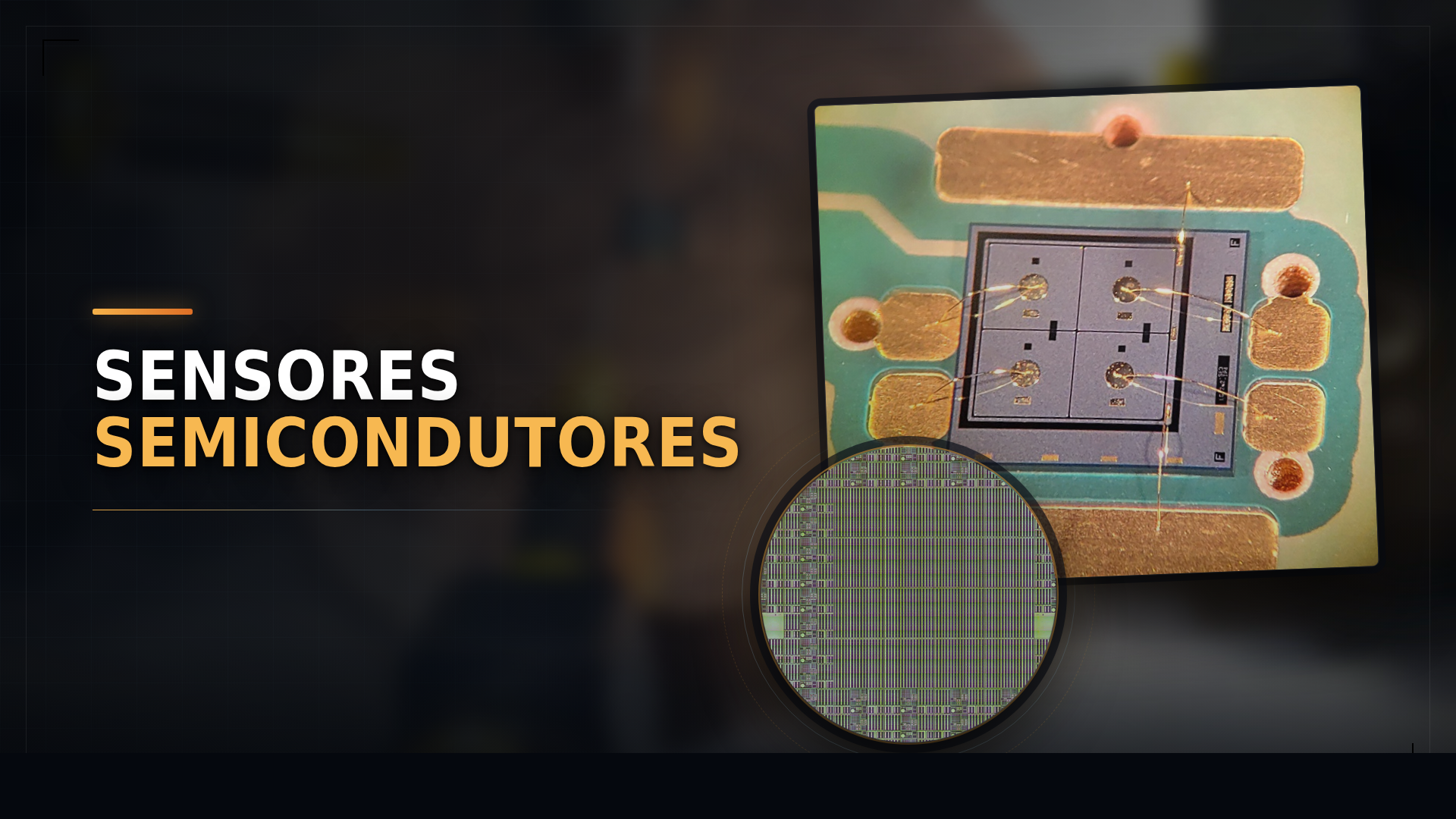
About the module
Semiconductor sensors are the dominant technology for vertex and tracking detectors in high-energy-physics experiments such as those operating at the Large Hadron Collider (LHC). They are also central to the High-Luminosity LHC upgrades and future colliders. This course connects physical principles with experiments involving devices, data and simulation tools used by the scientific community.
Participants will study semiconductor physics for ionizing-radiation detection; investigate planar, strip, hybrid-pixel, LGAD and monolithic CMOS (MAPS) architectures; simulate electric fields, ionization and charge collection; perform electrical characterization, radioactive-source tests and transient-current-technique (TCT) measurements; discuss radiation damage and front-end electronics; and analyse experimental data using Python.
Syllabus
- Introduction to experimental particle physics, tracking detectors and semiconductor-detector systems.
- Interaction of particles and radiation with matter.
- Semiconductor physics: band structure, doping, p–n junctions and depletion regions.
- I–V and C–V curves.
- Signal formation and propagation: Ramo–Shockley theorem, carrier drift and diffusion, and mobility.
- Device technologies: planar, strip, hybrid-pixel, LGAD and MAPS sensors.
- Introduction to signal-processing electronics.
- Numerical simulation of electric fields, ionization and charge collection.
- Laser-based transient current technique (TCT).
- Radiation damage.
Prerequisites
Recommended background: electromagnetism, introductory solid-state physics — including energy bands and semiconductors —, basic electrical circuits and introductory particle physics.
Bibliography
- W. R. Leo, Techniques for Nuclear and Particle Physics Experiments.
- G. F. Knoll, Radiation Detection and Measurement.
- R. F. Pierret, Semiconductor Device Fundamentals.
- H. Spieler, Semiconductor Detector Systems.